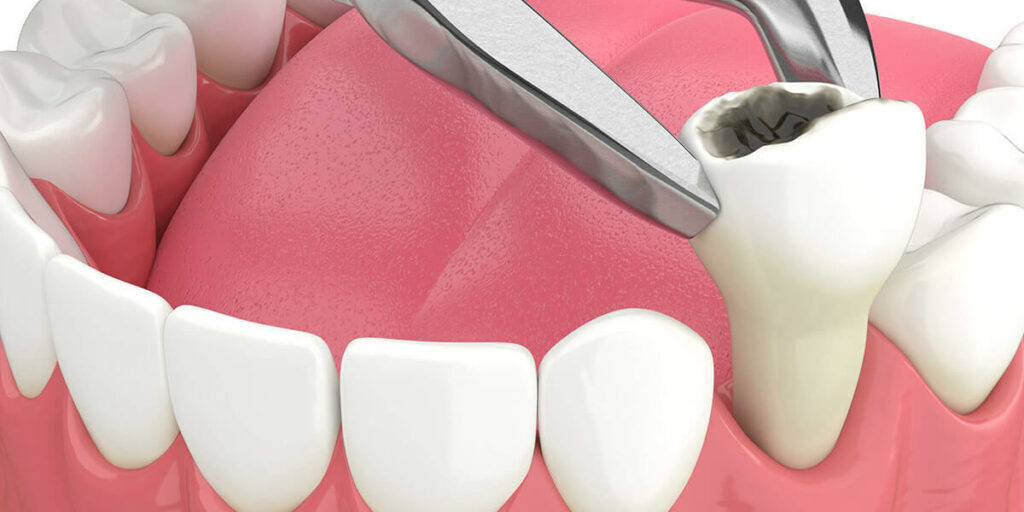
Key Aspects of Dental Extraction
-
Indications:
Severe decay, fractures, periodontal disease, orthodontic crowding, or impacted teeth (especially third molars).
Types of Procedures
-
Simple Extraction:
Used for visible teeth; instruments like elevators and forceps are used to loosen and remove the tooth. -
Surgical Extraction:
Required for broken-down, impacted, or severely curved roots, often involving incisions, bone removal, or tooth sectioning.
Technique:
The dental surgeon expands the bony socket using controlled forces, employing elevators for loosening and forceps for removal.
Post-Operative Care:
A blood clot forms in the socket. Patients are advised to bite on gauze for 15–20 minutes to achieve hemostasis, maintain a soft diet, and avoid smoking or using straws to prevent dry socket (alveolar osteitis).
Complications:
Although uncommon, risks include infection, prolonged bleeding, nerve damage, or injury to adjacent teeth.
At Katna Dental Clinic, we perform all types of extractions, from simple extractions to impacted third molar extractions, with great comfort and minimal pain for the patient.
Dr Anchal’s expertise in dental extraction, or exodontia, combines precise knowledge of oral anatomy with excellent manual dexterity, enabling atraumatic removal of teeth while preserving surrounding bone and tissues. The procedure involves a blend of diagnostic acumen, patient management, and the application of physical principles such as levers, wedges, and wheels.
Dr Anchal’s Key Skills and Competencies for Extractions
1. Technical & Procedural Skills
- Atraumatic Technique: Removing teeth with minimal damage to surrounding bone, which is crucial for future implant placement.
- Radiographic Interpretation: Careful analysis of intraoral periapical radiographs or OPG to assess root morphology and proximity to nerves or sinuses.
- Instrument Proficiency: Skilled use of elevators to sever the periodontal ligament and luxate the tooth, followed by forceps for final removal.
- Surgical Knowledge: Expertise in flap design, osteotomy, and tooth sectioning for complex cases.
- Hemostasis: Effective control of bleeding using sutures or hemostatic agents.
2. Physical & Motor Skills
- Dexterity: Ability to perform precise movements within the confined oral cavity.
- Controlled Force Application: Applying optimal force to mobilize teeth without causing crown or root fractures.
- Ergonomics: Proper operator and patient positioning to maximize leverage and control, commonly at the 11 o’clock position for mandibular extractions.
3. Diagnostic & Assessment Skills
- Medical History Evaluation: Assessing systemic conditions such as blood disorders, diabetes, or use of anticoagulant medications.
- Anatomical Knowledge: Understanding maxillary and mandibular anatomy, bone density, and nerve locations to prevent complications.
- Infection Control: Identifying acute infections and planning extraction timing appropriately.
4. Patient Management (Soft Skills)
- Anxiety Management: A calm and reassuring approach to manage patient fear and pain-related anxiety.
- Anesthesia Administration: Precise delivery of local anesthesia and nerve blocks, such as the inferior alveolar nerve block, to ensure a painless experience.
- Clear Communication: Providing thorough pre- and post-operative instructions to minimize complications and promote smooth healing.
