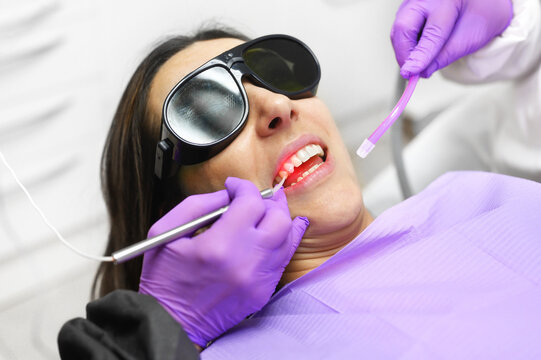
Common Soft Tissue Diode Laser Applications
- Gingivectomy / Gingivoplasty: Reshaping or removing gum tissue for aesthetic or functional reasons.
- Frenectomy: Release of tongue-tie (ankyloglossia) or lip-tie.
- Crown Lengthening: Exposing additional tooth structure for restorative procedures.
- Gingival Depigmentation: Removal of dark melanin pigmentation from gums.
- Lesion Removal: Excision of fibromas, papillomas, or mucoceles.
- Peri-implantitis / Periodontal Treatment: Decontamination and management of periodontal pockets.
- Troughing: Creating a precise, dry sulcus for accurate crown impressions.
- Aphthous Ulcer Treatment: Pain reduction and acceleration of healing.
Advantages Over Conventional Surgery
- Reduced Bleeding: Laser energy coagulates blood vessels instantly.
- Improved Healing & Less Pain: Minimal tissue trauma results in reduced inflammation and postoperative discomfort.
- Sterilization: Laser light disinfects the surgical site, lowering infection risk.
- No Sutures: Many laser procedures do not require sutures, enhancing patient comfort.
- Precision: Enables accurate treatment in delicate and confined areas.
Key Procedural Details
- Mechanism: Diode lasers are absorbed by hemoglobin and melanin, making them ideal for soft tissue procedures while sparing hard tissues such as hydroxyapatite and water-rich structures.
- Anesthesia: Many procedures require minimal or no local anesthesia due to laser sealing of nerve endings.
- Technique: The laser is used in contact mode with a fiber-optic tip, allowing precise cutting and coagulation (hemostasis) in a single step.
Key Post-Operative Instructions
- Pain Management: Use over-the-counter pain relievers such as ibuprofen or acetaminophen for the first 24 hours.
- Oral Hygiene: Gently brush the area and use warm saltwater or antimicrobial rinses (e.g., Listerine).
- Dietary Restrictions: Follow a soft food diet for 24 hours; avoid spicy, crunchy, or hot foods.
- Activity: Avoid smoking for at least 48 hours.
- Healing Observations: A white, grey, or yellow appearance at the treated site is a normal tissue response.
- Follow-up: Schedule follow-up visits to monitor healing and detect rare complications.
Recovery Expectations
- Speed: Laser-treated wounds generally heal faster than those from conventional surgery.
- Symptom Management: Minimal swelling and pain are common, with healing typically within 2–4 days.
- Restrictions: Avoid strenuous exercise or heavy lifting for at least 48 hours.
Safety Precautions
- Mandatory use of protective laser goggles for the patient, operator, and assisting staff to prevent retinal injury.
- High-speed suction is employed to manage the laser plume generated during tissue vaporization.
At Katna Dental Clinic, Dr. Anchal performs all soft tissue laser surgeries using diode laser technology with maximum precision and minimal discomfort to the patient. Strict protocols and safety measures are followed to eliminate any iatrogenic hazards and ensure optimal healing outcomes.
